Nervous System Regulation
Somatic Intelligence
How to Regulate Your Nervous System as a Founder
9 Tools That Actually Work
You're about to send an important email and your hands are shaking. Or you just got off a tense call and can't focus on anything else. Or you're lying in bed at 2am, exhausted but unable to sleep because your mind won't stop.
Your nervous system is dysregulated. And no amount of "just calm down" is going to help.
Here's what most people don't understand: Your nervous system isn't something you control with willpower. It's an ancient, automatic system designed to keep you alive. When it perceives threat - real or imagined - it activates. When it feels safe, it settles.
The problem? In the startup world, your nervous system rarely feels safe.
Why Founders Stay Stuck in Activation
Constant uncertainty. High stakes. No clear timeline for when things will stabilize. Your nervous system interprets this as an ongoing threat. It keeps you activated, vigilant, ready to respond.
This worked for our ancestors facing immediate physical danger. It doesn't work for building a company over years.
This is what happens: Your body stays in a state meant for short-term survival while you're trying to make long-term strategic decisions. You're running a marathon in sprint mode. Eventually, something breaks.
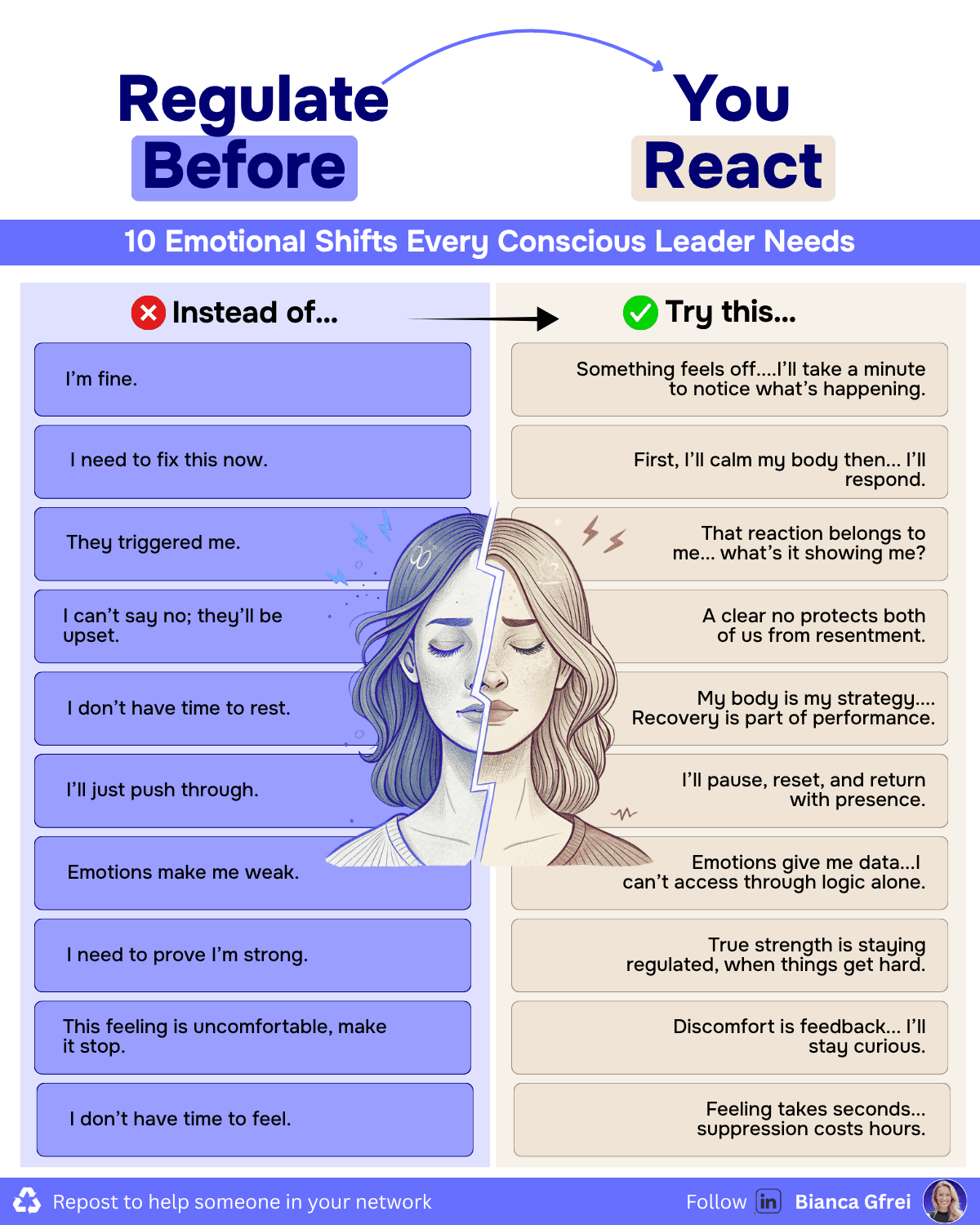
The usual advice - "manage your stress," "practice self-care" - misses the point. You can't think your way into regulation. You have to work with your body.
Nine Ways to Regulate Your Nervous System (That Actually Work)
These aren't productivity hacks. They're biological interventions. Your nervous system responds to specific inputs. Here's what actually helps it shift from threat mode to safety mode.
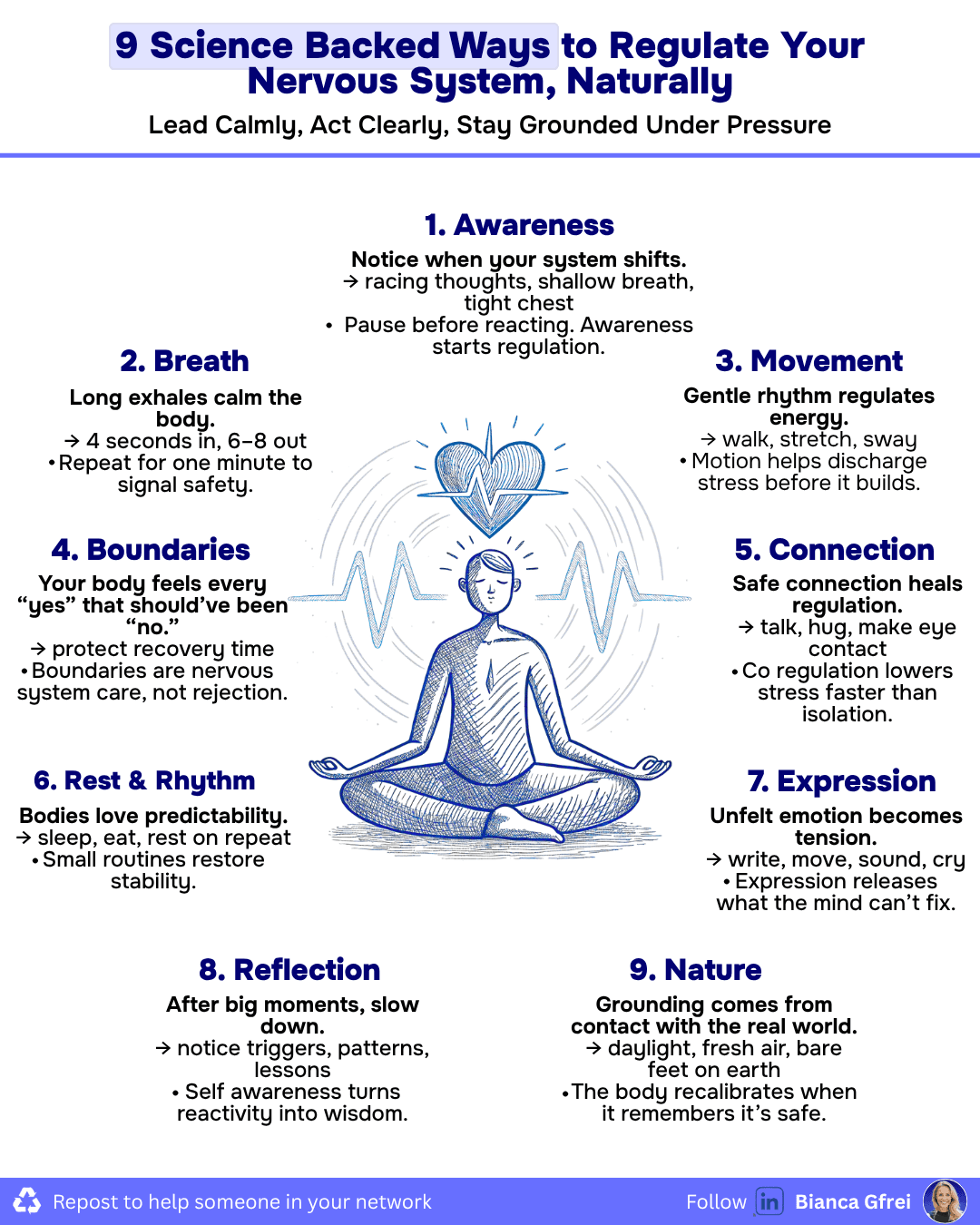
1. Awareness
Notice when your system shifts. Racing thoughts, shallow breath, tight chest. These aren't random - they're your nervous system communicating. Pause before reacting. Awareness starts regulation.
Most founders are so used to activation they don't even notice it anymore. You think the racing thoughts and tight chest are normal. They're not. They're your system in threat mode.
The first step is simply noticing: "My system has shifted."
2. Breath
Long exhales calm the body. Four seconds in, six to eight seconds out. Repeat for one minute to signal safety.
This isn't meditation. It's physiology!
The long exhale activates your vagus nerve, which tells your nervous system it's safe to stand down. One minute of intentional breathing can shift you from activated to regulated.
Do this before important decisions, after difficult conversations, anytime you notice activation.
3. Movement
Gentle rhythm regulates energy. Walk, stretch, sway. Motion helps discharge stress before it builds.
Your body is designed to move after stress. When your ancestors or wild animals faced danger, they ran or fought - then walked it off. You sit through a tense board meeting and immediately jump to the next thing. The stress stays in your system.
Five minutes of movement completes the cycle.
4. Boundaries
Your body feels every "yes" that should've been "no." Protect recovery time. Boundaries are nervous system care, not rejection.
Every time you override your limits, you're telling your nervous system that its signals don't matter. Say yes when you mean no enough times and your system stops trusting you to protect it. It becomes hypervigilant, scanning for danger because you're not honoring its warnings.
Clear boundaries tell your system it's safe.
5. Connection
Safe connection heals regulation. Talk, hug, make eye contact. Co-regulation lowers stress faster than isolation.
Your nervous system calms down faster in the presence of another regulated nervous system. This is co-regulation. Isolation when you're activated keeps you stuck. Connection - with someone who isn't trying to fix you, just be present - brings you back.
A ten-minute conversation with a trusted person does more for regulation than an hour alone trying to "calm down."
6. Rest & Rhythm
Bodies love predictability. Sleep, eat, rest on repeat. Small routines restore stability.
When everything else in your life is uncertain, your nervous system clings to whatever predictability it can find. Eating at roughly the same times. Going to bed around the same time.
Small rhythms signal safety. They tell your system: "Even though everything is chaotic, some things are reliable."
7. Expression
Unfelt emotion becomes tension. Write, move, sound, cry. Expression releases what the mind can't fix.
You can't think your way out of emotions. They're stored in your body and they need to move through. Journaling, crying, yelling in your car, shaking out tension - these aren't dramatic. They're how you complete the emotional cycle.
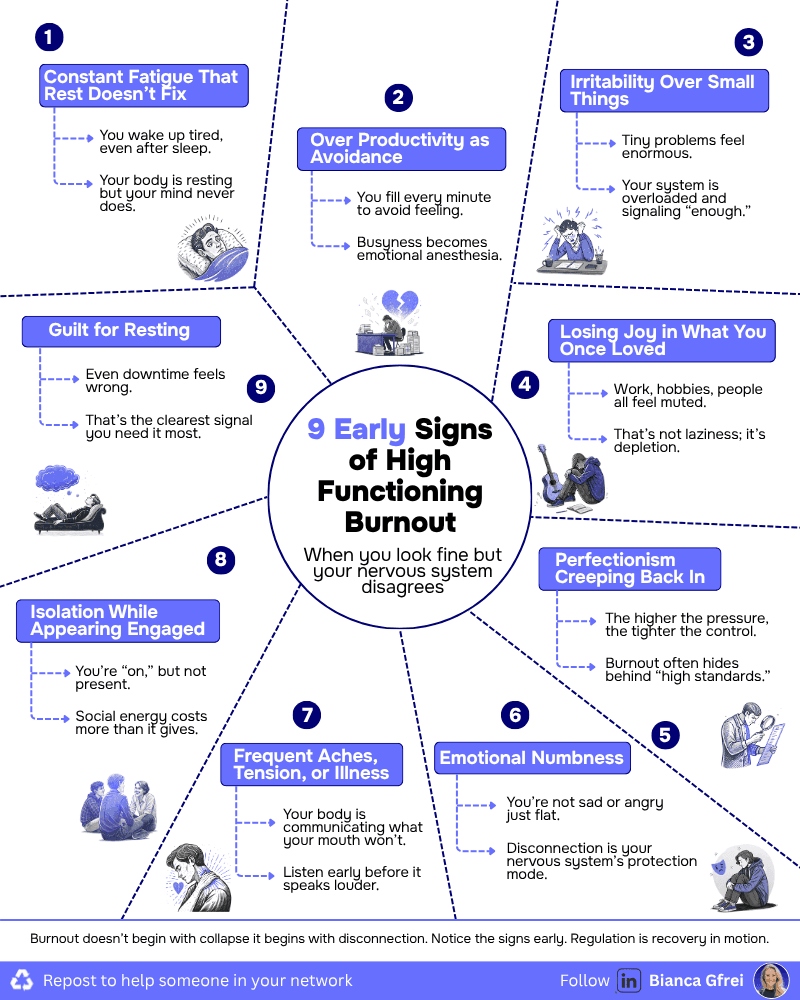
Suppressed emotions don't disappear. They accumulate as tension, irritability, physical symptoms.
8. Reflection
After big moments, slow down. Notice triggers, patterns, lessons. Self-awareness turns reactivity into wisdom.
Most founders move so fast they never process what happened. You have a difficult conversation and immediately jump to the next task. Your nervous system never gets to complete the cycle.
Take five minutes after intense moments to simply notice: What happened in my body? What got triggered? What am I learning? This integration is how you build resilience.
9. Nature
Grounding comes from contact with the real world. Daylight, fresh air, bare feet on earth. The body recalibrates when it remembers it's safe.
Your nervous system evolved in nature. When you're only indoors, only on screens, only in artificial environments, your system gets disoriented. Fifteen minutes outside - actually outside, not on your phone - recalibrates your nervous system. Bare feet on grass or dirt is even better. It sounds simple because it is.
Your body knows what it needs.
What Makes This Work (And What Doesn't)
Here's the honest truth: Doing any of these once won't change much. Your nervous system learned its current patterns over years. It learned that the world is threatening, that rest is dangerous, that it needs to stay vigilant.
Retraining takes repetition. Not because you're doing it wrong, but because that's how nervous systems work. They learn through consistent experience.
You can't biohack your way out of dysregulation. You can't optimize it or efficiency your way through it. This work requires slowing down enough to actually feel what's happening in your body. For most founders, that's the hardest part.
The practices above work. But they work when you actually do them, consistently, even when you don't feel like it. Especially when you don't feel like it.
Start with one. Not all nine. Pick the one that feels most accessible and practice it for two weeks. Build the habit before adding more. This isn't about perfection - it's about repetition.
Some founders start with breath because it's always available. Some start with movement because it's easier to feel. Some start with boundaries because that's where they're hemorrhaging the most energy. Choose based on what your system needs most right now.
But here's what we're learning: If you're deep in dysregulation - if your nervous system has been in chronic activation for months or years - these practices create relief, but they might not be enough on their own.
Long-term dysregulation often has roots in deeper patterns. The ones where you learned your worth depends on productivity. Where vulnerability feels dangerous. Where rest means you're falling behind. Those patterns need more than technique. They need witnessed, supported, structured work to unwind.
That doesn't mean these practices don't matter. They're essential. They're how you build capacity for the deeper work. They're how you create moments of safety that your nervous system can start to trust.
Regulation isn't something you achieve once. It's something you practice daily. The most effective founders aren't the ones who never get dysregulated - they're the ones who know how to come back to center.
— Bianca
Go deeper
Download the
CheatSheat
Ready to Upgrade Your Founder OS?
If you're recognizing yourself in these patterns and ready for more than quick fixes, the REWIRED program applications open January 2026. Six months of nervous system work, emotional mastery, and founder community.
Applications open January 2026 - Cohort starts March 2026